Wednesday, May 23, 2012

The Greenhouse Q&A

On Sunday night, May 6, 2012, I was the guest of The Greenhouse Arts and Media of Hollywood, CA that meets monthly at the CBS Studio Lot in Studio City, CA. From its website http://www.GreenhouseProductions.com:
The Greenhouse exists to bring creative artists to life. Its mission is to maximize the potential and productivity of individuals engaged in the creative arts by equipping them in all areas of life through relationships, mentoring, group discussions, and artistic projects. It seeks to engage and enhance culture locally and globally through superior artwork and entertainment. By seeking to value, serve, and equip artists and the artistic community, and by maintaining a commitment to creativity and artistic excellence, The Greenhouse will provide people with the opportunity to create quality art and entertainment that explores meaning, moves emotion, sparks imagination, and enlightens the soul.

You should not confuse the Greenhouse in Hollywood of which I was a guest with The Greenhouse in Hollywood, FL which is a vegetarian restaurant, or with Ann's Florist and Greenhouse, also in Hollywood, FL , or the Greenhouse Herbal Center Medical Marijuana Collective of Hollywood, CA.

Shun Lee, my host, kept me busy for over an hour asking questions. But then he made the mistake of inviting those in the audience (about 130 souls) to email questions to his smart phone and he'd ask me their questions. Well, we got though three of the questions before we ran out of time. So, then I made the mistake of saying, "Hey, Shun, send me the questions and I'll answer them on my blog."

So, here are the questions verbatim, and my answers.

Christ Y. For multiple film stories (trilogies), do you believe that the unidirectional character arc is still a solid way to go or does multiple films introduce the possibility toward turning the character arc a completely different direction and is this a good idea?
Stan: Each movie should stand on its own, and all the movies together should be about one super-arc moral issue. In fact, the protagonist in each movie may be different, as well as the moral premise. At the same time, premises, arcs, and goals, can be nested, so that each movie is about its own one thing, and altogether they can be about one things that where the issues are nested. Thus, the super arc can be about selfishness vs. selflessness, but each movie may feature a different character that struggles with sub forms of selfishness such as greed, tyranny, and power.
Hans Obma: Are there any moral premises that will work well in a book but not in a movie?  Or vice versa?
Stan: No. A moral premise is not media dependent. What works good in a movie will work in a book, will work in a movie.
Hans Obma: Could you break down the moral premise in Hitch?  Or Lord of the Rings?
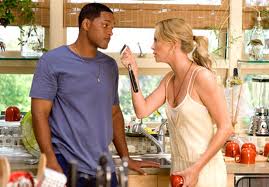
Stan: I have not studied or broken down The Lord of the Rings. You'd think I should have done that, but it takes a while, especially with a long movie. The moral premise for Hitch is based on a Nicomachean Ethics Value Scale, with RESPECTABLE HONESTY (or the ABSENCE of SECRETS and RESPECTING PRIVACY) as the central virtue. On the extreme virtue side of the scale we'd find BEHAVIOR MODIFICATION and PREPARATION FOR OPPORTUNITIES (what Hitch does in his job as a date doctor). On the absence of virtue side of the scale we'd find MANIPULATION and TAKING ADVANTAGES OF SITUATIONS (what Sara does in her job as a gossip columnist). Put more simply, Hitch tries to find the truth in a possible relationship and plan to make the relationship work. Sara tries to find the treachery in a relationship and celebrates with the relationship falls apart. Thus the moral premise could be stated like this:

Pretending to be someone we aren't (playing a game of false identify)
leads to loneliness;
but
being honest about who we really are (our true essence)
leads to relationship.
Jessica Keath: Can you give examples of films that fail to realize their moral premises?  What could they have done better?
Jessica, I think you mean to ask for examples of films that fail to have a consistent or true moral premise and thus fail to connect with audiences. Examples would be: SEVEN POUNDS (false moral premise, general audiences will not accept suicide as ever redemptive); CITY SLICKERS II (acquiring wealth that is not ours, does not bring happiness); BELLA (fails to make clear what it's really about).
Jessica Keath: Does crafting a moral premise violate or conflict with the documentary story telling process?
Stan: Not at all. The process of constructing a story from documentary material is still the same, but it may be harder to find a natural dramatic structure without changing some story element that general audiences prefer to see in such a story.
Cheryl McKay Price: Is there a common moral premise for the most successful films?
Stan: Not really. Yet, there are some conflict-of-values pairings (the psychological virtues and vice that set up the left hand terms in a moral premise statement) that are more common due to their heightened universality: e.g. Selfishness vs. Selflessness
Kirsten Roquemore: Would it be like Christians in Nazi Germany lying to protect Jews? i.e. if they were totally truthful it would have led to the death of the people they were hiding
Stan: Are you asking, "Would it be morally right for Christians in Nazi, Germany to lie to the Nazis about their hiding of Jews in their house? If the Christians would totally truthful, it would lead to the death of those they were hiding?"

I've actually debated this question with theologians, because it is not hypothetical and a moral issue in any number of movies,  such as the one I've been pitching around town (Berlin. 1943. A 14-year old German girl dares battle her mother' fiance, an S.S. Colonel, in order to save her two Jewish friends from liquidation when the Colonel is assigned to destroy a ghetto. If you wish for peace.... PARABELLUM). Two answers. (a) With respect to the moral premise, the answer is that the audience's general perception of what is natural and true drives the movie's potential popularity, not some absolute, esoteric theological position... although, generally, natural law and theological truth should not disagree when both are accurate. (b) While it is never right to lie, in some circumstances the moral consequence of lying is insignificant. That is a Christian lying to a Nazi about Jews hiding in their attic is a sin. But some theologians would argue that God would look past the sin because to tell the truth would bring about something worse... the murders of humans.
Paul Rose Jr.: What about the Fast & the Furious, where the "bad guys" are the heroes?
Stan: Like a number of movies, Fast and Furious has a true moral premise, but it's about bad guys learning what "bad" is and how to "redeem" themselves. Right and wrong consists of degrees. Thus stealing a tanker of gasoline in wrong, but murder is worse. Another theme you'll find in movies like the James Bond movies, the TV show 24, the Mission Impossible stories, etc. is that there is a natural law that is above the laws of the state. The general movie goer understands this (subliminally), and thus they root for the best outcome for the hero, whether he's a good or bad guy. In short, bad guys can find redemption but not without some natural consequence.
Unknown: Since Oceans 11 almost promotes stealing, what would the moral premise be?
Stan: This sounds bad, but I have not screened OCEANS 11. But from reading the storyline, it probably seems the audience would think that stealing from a casino (who entices the poor and the rich to give up their money under the pretense of a hope driven by greed) is far less a sin than adultery or sexual slavery. This is another case where the audiences have this idea that natural moral law trumps federal and state laws. I sense that the general public believe that casinos are legal fronts for theft and greed. Thus, taking down such an evil empire by emptying its vault is a virtue.I have this speculative sense that God would smile on casinos going broke.
Brian Chan: Do you believe the journey of the protagonist from vice to virtue is a quest toward wholeness in his humanity that we desire to see in ourselves?
Stan: Ah, there you go, Brian, asking the theological astute question. I absolutely believe you are right and what you say is a major reason people go to the movies. They want to discover how to achieve that wholeness and live life more happily.
Brian Chan: Does the law of the moral premise parallel with the law of beauty in our own redemption and transformation?
Stan: Absolutely. And I recommend Brian's book. There is a perfect alignment of Brian's writing about beauty found in Christian theology, and the true and consistently applied moral premise in a story. (Brian asked this knowing I no doubt plug his book. Glad to do so. The Purple Curtain.)
Brooke Lander Shurtz: Can you talk a little about TV specifically half-hour comedy, relating to the moral premise and an example of a show you can think of that illustrates metaphorically?
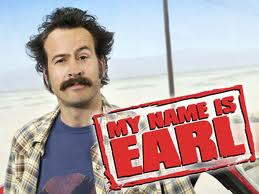
Stan: I have not studied half-hour comedy that much. But "My Name is Earl," "Fresh Prince of Bel-Aire," and "That 70's Show" and "Friends" all would have true and consistently applied moral premises. In fact, in my book, I talk about "Married with Children." Check it out. Remember, a true moral premise is one that truthfully applies natural consequences to moral decisions within the diocese of the story's setting.
Unknown: Have you ever had a project rejected by a studio for its moral premise and accepted by another.
Stan: No. But then I've submitted very few scripts or stories to very few studios. Usually rejections come without explanation. I would venture to say that there are dozens of good reasons to reject a story before you get anywhere close to figuring out if the moral premise is true or false. In fact, in my Story Development Steps figuring out the moral premise is not at the top.
Jonathan Perkins: I believe you reference the "moment of grace" as happening at the midpoint. What is the difference of that at the midpoint versus the character's choosing the "winning" solution, which marks their breaking into act 3?
Stan: The Moment of Grace (of the protagonist's main storyline) and the film's Mid-Point do occur at the same time, and the closer to the middle of the picture the better. The Moment of Grace is that point where the character consciously or subconsciously discovers the truth of the moral premise and begins to pursue the physical goal with the truth of the moral premise as his or her motivation. (That's true at least in a redemptive film. The opposite is true in a tragedy.) But the protagonist is not perfect. The MOG is not a 180-degree turn. And until the final Climax of the story (end of Act 3) the protagonist is still learning. There will be setbacks, such as at the end of Act 2 and his or her "near death experience" where it seems that the antagonistic force has forever prevailed. But something more happens at the Act 2/3 crossover. There's a moment after the Act 2 climax where the protagonist is utterly defeated and goes through the dark night of the soul. And then, for some organic and dynamic story reason that the writer comes up with, there's a moment of realization, or a resurrection beat, or something that causes the protagonist to remove his or her mask of false identity and turn to his or her true essence and the solution that wins the day. That "winning solution" that you mention which appears in the early part of Act 3, was first foreshadowed and recognized by the protagonist at the Moment of Grace. But it's not until Act 3 that he or she fully realizes the extent, or the martyrdom, that has to be embraced to win the day.
Paul Rio: In relationship to your faith in God, what is the premise of your life?
Stan: I often sign my books, "May you discover the true moral premise for your life's story and follow it to eternal success." In that sense, I would answer two ways. First my mission in life is this: "To discover divine truth and promote it to those within my sphere of influence." Second, to restate that as a moral premise statement (which I have never done before, so thank you for the question) might go like this (subject to revision): Embracing fallacious falsehoods as guidance for life leads to dissatisfaction and dread; but embracing divine truth as guidance for life leads to satisfaction and fulfillment.
Unknown: Isn't Skeeter in The Help a traveling angel character?
Stan: I'm not familiar with that term or the narrative system it comes from. But I can see where calling her that could make some sense. One of Joseph Campbell's geniuses is recognizing that the mythic identities of characters can overlap at times, and one character can play multiple roles. But Skeeter isn't without conflict, although she is a steadfast character, which is where you get the idea of the "traveling angel." Her steadfastness changes a number of characters that make choices off her worldview, her boyfriend, her mother, the Help, and her editor.
Kirsten Roquemore: I was deeply impacted by "A Simple Plan". What is your opinion of the storyline?
Stan: Greed leads to distrust; but extreme greed leads to murder—a true moral premise. Tragedies don't do well at the box office, however, for reasons other than the moral premise.
Yong Hwan Kang: Can you tell me (if) Star Wars (is) based on George Lucas' family experience?
Stan: I have no idea. But usually there is some aspect of "write what you know" in all successful films.
Sarah Williams: When holding your sessions how do you decipher the writing style of your students of "pantser or plotter" and how do you groom them?
Stan: I don't groom writers, they don't like being brushed. You can tell a pantser from a plotter only after viewing their work or talking to their agent or talking to the writer about their writing history. After describing the difference and the  pros and cons of each, usually a person will tell me what their tendency is, and we can go from there. Where my coaching goes from there depends on the writer's discipline to apply what I suggest. We discuss what they think their problem is, and I'll suggest a solution or process to apply for the next few weeks of writing. The writer will come back and show me what they did, or tell me, and we make adjustments. Ultimately, every writer is different, and subtleties of practice make all the difference in the world in terms of completing a work.
Chuck Hayes: When does a moral premise become cliche?
Stan: When the statement is so general that is applies to too many stories. e.g. "Hate leads to death; but love leads to life." A good moral premise statement will specifically respond and describe a particular story and not so many others.
It's also probably important to point out that the moral premise statement never needs to be written or spoken in a story, and since it is essentially a secret tool of the writer the statement has the opportunity of never becoming "cliché." The danger is in the statement being so broad that anything goes for the characters and what the story is really about becomes obtuse or ambiguous to the writer during the writing, and to the audience during the viewing. 
Samantha Marquard: What do you make of the phenomenon of the Twilight series and Hunger Games. What is the moral premise of both?
Stan: Both the Twilight Series and the Hunger Games movie (with more to come) are about true moral premises. The Hunger Games' moral premise is this:
Ignoring conscience leads to TYRANNY; but
Heeding conscience leads to FREEDOM
where conscience is understood to be an individuals' moral conscience that is conformed to natural law.
The Twilight  stories are all about rebellion, conformity, sacrificial love, vs. selfish lust. I have not worked out a moral premise statement for the series, but in the first film James says this: "Whether you want to be rebellious or conform I think it really boils down to choices, and every Teenagers goes through these choices, and where they want their lives to end up."
And in an interview, author Stephanie Meyer says, "The idea that these creatures are so strong and yet they try so hard to be good when they really don't have to. I think that appeals to a lot of young people. You can be whatever you want, no matter what stereotype you fit into, you don't have to go by those rules.

Bella has this line: : I've never given much thought to how I would die. But dying to take the place of someone I love is a good way to go.

Finally, I think Stephen King over simplifies the movie Twilight a bit, but there's an element of sarcastic truth in his comment about our culture when he says, "Harry Potter is about the importance of sacrificing one's life for your life. Twilight is all about how important it is to have a boyfriend."
Michael Mitchell: Is there a film that has a major lack of moral premise that was successful?
Stan: Not that I know.
Jim Krueger: C.S. Lewis talks about how he has no desire to gamble.  No inclination at all.  And then he states that this is not necessarily a good thing, because it also means that he lacks the virtue that gambling is the fallen form of.

How would this fit into your Moral Premise approach to story?  And, does this sort of character only work as a supporting character to the protagonist/antagonist, as a metaphor/warped mirror of the main moral conflict.
Stan: I think C.S. Lewis is wrong about himself. First, he gambled when he embraced Christianity, although he waited and debated a long time to minimize whatever risk there was.
Second, he gambled every time he wrote a poem, essay, or book. He gambled on England and his reputation when he gave his war broadcasts. I think that what he meant to say was this, "I have no desire to risk what I think will ultimately fail." That is perhaps gambling in a pure state, but it is practiced only by the weak of mind and fools, of which C.S.Lewis was not a participant.

Third, Lewis, perfectly in my estimate, demonstrated the virtue that is opposite of gambling; e.g. reason, debate, thorough analysis, comparison to natural law, etc. He was not a gambler because he was such a good critical thinker. QED, he was wrong.
Shaun Pilkington: Some movies break box office records but are very skimpy on anything related to morals or plots. What do you think of movies like The Avengers?
I have not seen the Avengers, but I have read the synopsis. I dare say it has a true moral premise at it's core and a lot of plot, although both are probably swallowed up in SFX and CGI candy. But both are there. In terms of plot there are the protagonists and the antagonists who want to take over Earth, but the protagonists (The Avengers) fight as a team and figure out how to defeat Loki and his accomplices. From reading the synopsis is appears, as in all good stories, the protagonists are not immediately successful. They start out not being very productive then discover the right way to attack, and finally do so to win.
In terms of a moral premise, you probably having something like:
Lust for power leads to defeat; but Sacrifice for others leads to success.
Now that's a good example of a moral premise statement that is almost too general for its own good. But until someone looks carefully at the movie and figures it out in the com box, that's what I have to offer.
Thank you for your good questions, one and all.

I hope I was able to help.

Stan

Friday, May 18, 2012

Dear Friends of: 
Moral Premise Cover
NC SWC logos

I just returned from Los Angeles after 17 days mostly promoting The Moral Premise by (1) helping Jack Hafer produce a segment of the Biola Media Conference, (2) giving a couple Moral Premise Workshops, (3) being honored as the guest of a networking event on the CBS Studio lot by The Greenhouse -- my thanks to Shun Lee and his team for his enthusiasm, humor and promotional assistance, and (4) visiting with a number of past and present story consulting clients, acquaintances and friends (including my high school locker partner, Phil Bray, from 47 years ago).


MonicaMacer,Stan
With TV scribe Monica Macer.
At the Biola conference's morning General Session I was privileged to interview TV scribe Monica Macer (right) (Lost, 24, Prison Break) and musician-music producer-film director, Steve Taylor. (Steve, I'm so sorry we didn't get a picture of us together.)  Monica and Steve have agreed to do extended interviews with me that will appear later on The Great Conversation in Cinema Blog. 

DeVon and Stan
With DeVon Franklin in his office in the
Thalberg Building on the Sony Ent. Pict. lot. 
DeVon Franklin, a VP of Development and Production, invited me to lunch at the Sony lot and I was able to pitch and deliver a script and treatment for a couple movie ideas. DeVon and I are fans of each others' books. His book is Produced by Faith: Enjoy Real Success without losing your True Self that I highly recommend. He discovered The Moral Premise when it was recommended to him by Will Smith back in 2008. A few days after our luncheon we met in his office where we signed each others' books for ourselves and for friends.


Carl, Jeanette, Stan
With The Blums in front of the St. Luke parish hall that they labored with others to see built. 
I want to especially thank Temple City councilman Carl Blum and his wonderful wife Jeanette and their daughter Julie for letting me stay in a house they're renovating for Julie to live in with her caregiver.   I've stayed twice with the Blums and can highly recommend Temple City. It's only 4 square miles in size just five miles from the foot of Mt. Wilson. You can see the famous 100+ year old observatory (a white dot at the top of the mountain) from their street and they have a very rare redwood tree growing behind their garage. I discovered on this trip that The Blums are well-known in their community for the elaborate productions of plays in their backyard that their teenage children (Kathy, Veronica, Carl the 4th and Julie) staged and which were attended by hundreds. I saw video tape of Veronica (as Peter Pan) flying in on a wire and then flying off to the treetops with Peter and Wendy). They raised thousands for charity through their summer long projects dubbed by the press as The Hart Street Players. Amazing stuff for a backyard production -- but then Hollywood is nearby -- what'd you expect.  The Blums are fans of our work at Nineveh's Crossing.


JohnWareBrianBird
With John Ware (L) and Brian Bird (R) on the CBS Studio City Lot during the Biola Media Conference. 
Pictured here is producer-writer friend Brian Bird (R) with John Ware (L), founder and president of the 168-Film Project, a annual film festival open to anyone, in any location around the world, in which prizes are awarded for the best short film written and completed within 168 hours. John gave me a DVD of the top entries (amazing work), and a beautiful color brochure describing all 73 successful entries from this  year's efforts. John and Brian encouraged me to promote the competition back here in Michigan and see if the state with two-hands might make some entries in next year's contest. Sounds like a plan. You don't have to be in L.A. to participate.


And it's wonderful to be back in (cold) Michigan with my beautiful wife Pam.


Sincerely,
Stan Williams


PamStanFT5646
Pam and Stan aboard Family Ties on the Detroit River


Sunday, May 6, 2012

Story Development Steps - Story Fundamentals

REVISED August 13, 2020

PART ONE
Writing a Focused Story

The broad, first steps in writing a successful story are outlined below in two sections. This first part lists The Story Fundamentals. The second is The Story Development Process.

If you're a story client of mine, stick with just Part One. Part Two will inform you about the whole thing, but the answers I want to accompany your script are just  1-7 of Part One, NOT Part Two.

I believe the Story Fundamentals should be listed on the first page of every script or manuscript because it sets up the reader in much the same way that a movie goer is set up to see a  movie. No movie goer attends a movie without first understanding what the movie is about in a general way; they know the fundamentals of the particular story.  So, that is how scripts should be read, with a page listing the Story's Fundamentals right up front.

For the writer, it really does not matter HOW you get to the story fundamentals. But knowing the fundamentals of your story are critical to effective and efficient writing the treatment and subsequent drafts of script or novel.

For my story coaching clients, please provide me with short one- or two-line descriptions of  the first seven (1-7) steps below. The more focused and precise you think them through and write them, the more effective will be our time together on step 8, which is what most need help on. Few of my clients actually have all seven items below answered when they come to me. But our consulting time together is designed to first get Steps 1-7 right, and then move on to Step 8.  Once you get past step 8 your story will practically write itself in terms of plot and character motivations. Actors who are writers will especially enjoy this, because after they answer 1-8 (with or without my help), they will fully understand their on-camera motivations.

The Story Fundamentals
What You Should Know Before You Start Writing,
and my goal in coaching you... to get you here.
  1. TITLE, GENRE, ERA, SETTING, DEMOGRAPHIC
  2. HOOK
  3. LOG-LINE (Short and Long), TAG LINE
  4. CONFLICT OF VALUES (Simple Dipole, Linear Nicomachean, or Layered Nicomachean)
  5. MORAL PREMISE STATEMENT (Simple or Complex)
  6. PROTAGONIST, ANTAGONIST descriptions
  7. Protagonist's physical GOAL and STAKES
Before we get into Step 8, it will be helpful to have read The Moral Premise, or to review this linked blog post: http://moralpremise.blogspot.com/search/label/13%20Major%20Beats

      8. MAJOR BEATS FOR PROTAGONIST (13-19, Turning Points, Disasters and Sequences)
The Writing
Now you can start to write, in order:

     9. SYNOPSIS (600 words with ending)
    10. OUTLINE (every major scene)
    11. TREATMENT (prose short story)
    12. DRAFT (formatted)


PART TWO
The Story Development Process
Steps to Writing a Successful Screenplay, Play or Novel

Here is a more detailed breakdown of the above.

The first eight steps should be executed iteratively. That is, it doesn't matter where you start, or in what order you do the steps in; although there is a logic to the order as presented. But it may not be your logic. So, just get on with it. Whatever works. Do it!

With each progression, go back and review the former decisions and see if they still fit. When you're done with 1-9 there should be a cohesiveness that will naturally drive steps 10-12. Although... even in working on 10-12 you will probably need to go back and revise 1-9. You're not God, so plan to do it over, and over, and over until you get it right.

My consulting is principally focused on the first eight steps and then how the decisions made are executed in your subsequent writing. These structural steps should be imbued in every sequence, every scene, and every dialogue exchange (and when it comes to production... in the casting, art direction, cinematography, music, etc.... all the way through marketing.) In the end the project should fit perfectly together and allow your story to resonate deeply with your audience.

1A. What is your story's working TITLE?

1B. What is the story's GENRE?

1C. What ERA (time period) does the story take place in?

1D. What is the story's SETTING (location, country, class)?

1E. What is the target  audience's DEMOGRAPHIC? (Sex, Age)

2. What is the story's physical HOOK? (this is the story's physical premise)

3A. What is the SHORT LOG LINE? (10-second pitch)

3B. What is the LONG LOG LINE? (or 60-second pitch)

3C. What is the story's TAG LINE? (What is the emotional heart of the story expressed in a short pithy line that would go on a poster?)

4.  What is the core CONFLICT OF VALUES that all the characters deal with?

5.  What is the MORAL-PHYSICAL PREMISE STATEMENT that guides every aspect of the film/novel?
6.     PROFILE MAIN CHARACTERS (start with your protagonist), in a short, descriptive and compelling paragraph that tries to answer these questions. You might construct these as interviews, with you asking the questions, and the character answering.
  • What is the character's name, sex, age, career, family?
  • What is she/he trying to accomplish? What is his/her goal for each of the subplots in his/her storyline, e.g., personal, family, professional, hobby, romance. Which of these plots drives the overall story? (i.e. there are multiple characters with multiple sub-plots, but ONLY one character, and ONLY one sub-plot for that character will drive the story forward.)
  • What is the character's moral vice or weakness?
  • What is the character's moral virtue or strength?
  • How does the character transform and change?
  • Who is trying to stop the character from reaching their goal?
  • What happens if the character fails? (i.e. what are the stakes?)
  • What irony is involved in each of the physical storylines?
  • What irony is involved in the psychological storylines?
7.   Describe
  • Protagonist's Physical GOAL
  • STAKES if goal is not achieved?
8.  Outline the MAJOR BEATS (13-19), first, for the protagonist across the 3 ACTS. Describe, also, the major beats (3-9) for each secondary character. (see description under 10 below.)

NOW YOU CAN START WRITING

9.  Write a 600-word SYNOPSIS that dramatically summarizes the main character and the major beats revealing the story's resolution.

10. Construct a scene OUTLINE. If you've followed my goals and plots advice, you will have beat out every storyline for all the characters. The protagonist will have between 3 and 6 story lines, one of which will be the physical spine of the story and include no less than 13 major beats. Minor characters will have between 1 and 3 story lines, none of which will exceed 13 beats, and most will have from 3 to 9 beats.  Place (stick) all of those story line beats (now on 3x5 cards) on the wall (like a large story diamond) and discover in what scenes the various beats of the various story lines occur simultaneously.  From this, draft your scene outline, including every beat of every storyline. Exclude establishing shots. This outline can then be expanded into prose, creating a full treatment.

11. Write a succinct prose TREATMENT (not script formatted). Make it read like a high-level short story. Avoid too much detail.

12. WRITE the first draft properly formatted. (Review and Repeat ad nauseam.)


Saturday, May 5, 2012

Steve Taylor & Monica Macer Interview

Here is an interview I conducted with rocker-film director Steve Taylor and TV writer Monica Macer at the BIOLA Media Conference in 2012. The video quality is pretty bad, but the content may still be of interest to some.  Steve, known more for his rock than his films, and Monica is a well respected writer in TV.

Friday, May 4, 2012

Stan's Comming Appearances

I have several gigs approaching that I'm excited to be a part.

Saturday, Saturday, May 5, 2012 
is the date for the 2012 Biola Media Conference at the CBS Studio Center Lot (4024 Radford Avenue Studio City, CA 91604). Keynote speakers will be Simon Swart, EVP of Fox Home Entertainment, and Devon Franklin, VP of Production at Columbia/Sony, and author of the wonderful book, "Produced By Faith." The theme of this year's conference is "Finding Your Creative Breakthroughs" -- discovering our creative journey of developing a story that connects with a worldwide audience.  Workshop speakers from Disney, Pixar, Industrial Light & Magic, and other world famous imagination factories will help us think through the creative barriers that keep us from fulfilling our dreams.


Oh, yeah, and there's me, Stan Williams. I'll be interviewing filmmaker Steve Taylor and television writer-producer Monica Macer on stage as part of The Great Conversation in Cinema. I will  also be presenting a one-hour, introductory workshop on The Moral Premise. I mentioned in a post earlier, that DeVon mentions "The Moral Premise" in his book "Produced By Faith," so it will be good to meet him in person. DeVon was the EVP from Columbia on the shoot in China with Will Smith and company for Karate Kid that I worked on. 

Evening, Sunday May 6, 2012 
I will also be the guest at the monthly Greenhouse event. The Greenhouse meets at the CBS Studios lot (4024 Radford Avenue Studio City, CA 91604) from 7pm - 9:30pm.  Guests should RSVP by emailing rsvp@greenhouseproductions.com and indicate the date and nature of the event along with their full name as it appears on their drivers license (ID's are checked at the security gate of the lot).
 

All Day Saturday, May 12, 2012 
The Greenhouse in L.A. is sponsoring an day long Moral Premise Workshop on the campus of the Hollywood Presbyterian Church.  Check out their website for more information.

Thursday, May 3, 2012

Monica Macer and Steve Taylor bios

We welcome Steve Taylor and Monica Macer to the Biola Media Conference stage on May 5, 2012 for the morning General Session of The Great Conversation in Cinema. 

-->
STEVE TAYLOR is a filmmaker with a past. After graduating from Colorado University in Boulder, his career in music garnered him multiple Grammy nominations as a recording artist, producer and songwriter. In 1997 he founded Squint Entertainment, whose roster included Sixpence None The Richer, Chevelle, Burlap To Cashmere, Waterdeep and hip-hop collective L.A. Symphony. His debut feature film, The Second Chance, was distributed theatrically by Sony Pictures Releasing in 2006. His second feature as director/co-writer, Blue Like Jazz, is based on Donald Miller's New York Times bestselling memoir. It debuted at the South By Southwest Film Festival in March and was released theatrically in April via Roadside Attractions. Steve lives in Nashville with his wife, the artist D.L. Taylor, and their daughter Sarah.

MONICA MACER is a graduate of Vassar College, Monica started her career in theater in New York City as a playwright and director.  After moving to Los Angeles, she  worked both as an assistant at Nickelodeon Movies and as a Creative Executive with the Walt Disney Company.   After leaving Disney, Monica landed the writers assistant position on the Fox show "24." After two seasons at "24," Monica got her big break as a staff writer on the first season of the ABC hit show "LOST."  She’s also written for Fox’s "Prison Break,” NBC's "Knight Rider" and MTV's "Teen Wolf."  Most recently, she served as co-producer on this season's NBC show "The Playboy Club." Her extracurricular activities include being an entertainment mentor for KOREA CREATIVE CONTENT AGENCY and a member of the TV track faculty for Act One. On the home front, Monica is married to actor/filmmaker Sterling Macer, Jr. and they are the proud parents of daughter Dylan Soon-Marie Macer.

Tuesday, March 27, 2012

The Hunger Games and Human Sacrifice

Here is a good story analysis of the truth behind The Hunger Games (THG). I have not seen the movie or read the book, but as I've said all along in my Moral Premise writings, any project that connects with audiences well (and THG may be ready to set an all time record for connecting with the masses) there is truth at its core. Fr. Barron suggests what that truth is, as well as providing a good and concise analysis of the human condition throughout history and the story antecedents for THG. This also reminds me of Polti's "The 36 Dramatic Situations" -- it's hard to come up with something truly unique.


Tuesday, February 7, 2012

MARTY. Thanks for Considering.

Marty said he's too busy to come to our conference. Understood. But I worked so hard at getting this graphic to look like it was really on the side of this bus, I'm going to leave it up.

Backstory: We had been trying to get Martin Scorsese's answer to our invitation to come to the Biola Media Conference, May 5 and be interviewed on stage. But he was so busy with the attention that HUGO received and the subsequent Academy Awards that the film was nominated for and won, that we were far down the pecking order to even get someone to call us back. We sent several invitations to him at his NY office, to his publicist, his business partner, we've sent flowers to the publicist's assistant. No response. So, the sign on the bus was next-to-the-last effort. We didn't have enough money to actually rent bus-sides and parade them up and down 5th Ave, so we found this image of a bus,  created the ad to match, printed off an 8 x 10 print and  priority mailed it to his office.  Someone thought Donald Trump paid for them. Who knows. Maybe Marty actually saw this and told his publicist he was too busy to deal with such people. LOL! We still like his movies. He's in a class by himself.


Friday, January 27, 2012

The 11 Story Imperatives & Log Line Mugs


Trying to be of help, here. Imagine, as you're writing, and every time you grab for your drink you're reminded of the 11 Story Imperatives or the Log Line elements that every story needs to succeed. I've culled these from my experience consulting on screenplays in Hollywood, my own writing, and research form successful and not so successful motion pictures.

They are available at The Moral Premise Story Shop at Cafe Press. Only modestly marked up.
http://www.cafepress.com/moralpremisestoryshop


Readable graphics of what's on the mugs, tumblers, glasses, etc are available at the Moral Premise Writing Aids web page.  http://www.moralpremise.com/storyaids.php

An written explanation of the Log Line mug and its graphic is HERE:


An written explanation of the Story Mug Shot mug a its graphic is HERE:


 Let me know if these help. The more you grab for that mug, the more you'll learn.

Thursday, January 5, 2012

Creating Emote Pacing Charts of a Story

Alex Melii asked how the emote charts were created in an earlier post on Rollercoaster Story Pacing Charts.

I recently created a chart for a different version of the same screenplay mentioned in the above post. It's now titled PARABELLUM. It's an teen-wartime-actionier story. 
In 1943, near Berlin, a rebellious 14-year old German girl dares to battle her mother's fiancé, a blood-thirsty S.S. Colonel, to rescue her Jewish friends from the ghetto before they’re liquidated. If you wish for peace, PARABELLUM. 

That genre and log line will explain the severe up and down slopes of the chart below, and the sustained high emotion of the final scenes.


As I explained in the earlier post about charts, the first time we created this chart for the script, there was this long slow (no action) part in the middle that obviously was out of place in a wartime-actionier script. So, those scenes were brushed, which also helped to shorten the story and get it below the 120 page limit, and closer to the 110 ideal.

At this point I explained (in a previous version of this post) how I took the Scene Length and Dialogue information from a Final Draft Report, and converted into data that generated the above chart. But in trying to do it again, the instructions were just too long and confusing, so I deleted it all.

What I would do to day is discussed here: https://moralpremise.blogspot.com/2019/07/ensuring-good-roller-coaster-ride-for_3.html

Monday, January 2, 2012

The Writer's 12 Step Program

I "teach" a Story Symposium once a month for 3 hours on a Saturday afternoon. As is typical of these "teaching" experiences, the first 1/2 of the class (first semester, first year) goes swimmingly, and everyone does their homework, and comes prepared. (Well, mostly.) 

Then comes the transition (after the theory) to actually write their own stuff and prove their substance -- or to justify their reason for occupying space and depleting the Earth's resources (like food and oxygen). It happens every time to me -- students fall-off like flies deprived of sugar. We need a transformation, but it only happens if the student writer has a passion for what they're writing or their career. Like I say about a good story. You need a passionate writer and a passionate protagonist. Without both you have nothing. 

So, my Story Symposium Class is struggling with this stage. We're meeting this Saturday for our first W.A. Meeting. That's "Writers Anonymous" ... as in the 12 Steps. And here they are:


The Writer’s 12 Steps to Getting It Done

  1. I admit that I am powerless to write like I should—that my creative life has become desolate and unmanageable through disuse.
  2. I believe that a power greater than myself can restore me to sanity, and get my quota of words written each and every day. 
  3. I have decided to turn my will and my life over to the care of God, as I understand Him.
  4. I daily search my life and make a fearless moral inventory of my motivations and whatever else has prevented me from applying my butt to a chair and my fingers to the keyboard.
  5. I admit to God, and to another human being the exact nature of my wrongs from the previous step.
  6. I am entirely ready to have God remove all these defects of character so that I will complete the story that God has set before me.
  7. I humbly ask God to remove my shortcomings and expect a completed work in the not too distant future.
  8. I have made a list of all persons we I have harmed by not living up to and disciplining my creative potential, and I am willing to make amends to them all.
  9. I have made direct amends to such people wherever possible, except when to do so would injure them or others.
  10. I continue to take personal inventory and when I am wrong I promptly admit it.
  11. Through prayer and meditation (or medication, depends on how bad off you are) I seek to improve my conscious contact with God praying only for knowledge of His will for me and the power to carry that out in my creative life of writing.
  12. Having had a spiritual awakening as the result of these steps, I will carry this message to other writers, and to practice these principles in all my affairs.
BTW: The 12 Steps of A.A. are sometimes used as the basic structure (or inspiration) of a story; MY NAME IS EARL is a great example.

Thursday, December 29, 2011

VIRTUES OF HORROR

At the onset, come clarifications:

(a) I have not studied horror as some have. There are some books (which I have not read) but which look valuable, and there are excellent articles on this topic that I have read, carefully, and recommend.

(b) My taste for horror is limited to those stories where the meaning is rich and thick, and the effects minimal.

(c) Most horror gratuity (explicit effects) is moral excess that can serve to dull and numb the conscience.

(d) I think well-crafted horror services a valuable purpose and I recommend such films, e.g. ALIEN, I AM LEGEND, THE DESCENT, (and the like) and THE PASSION OF THE CHRIST (yep, that's horror).

The best article I’ve seen is Brian Godawa’s AN APOLOGETIC OF HORROR that examines the horror genre in light of Christian theology and what is found in the Bible, both Old and New Testaments.  I highly recommend it, and will again. I won't attempt to summarize Brian's work, because it is efficient and exhaustive, and doesn't need my spin. It stands alone.

In my consulting and teaching a question keeps popping up, and so I need to answer it briefly, and let other experts expound and correct me, like Brian. The question is this:

"If the popularity of a movie is proportional of the truth communicated by that movie, how do horror movies (which are very popular) teach truth?" In other words, “Why are horror movies so dang popular?”

I think there are a host of reasons. Here is a brief list, which assumes that the movie in question connects with audiences on a large scale. All of these reasons relate to “the moral premise” -- characters make moral choices that have physical consequences that correlate with natural law. In no particular order, and with considerable overlap which I am too per-occupied otherwise to correct at this time:
  • Horror movies emotionally involve the audience and remind them that their soul is in danger of damnation. Pay attention ye mortals.
  • Horror movies cause us to identify with the protagonist. We fear for him or her, we yell out to watch out. In short, we practice compassion...a virtue... and, thus we are taught to warn our friends of evil lurking in dark places.
  • Horror movies reveal the consequences of characters who are sinful or foolish or weak. Such stories remind us “DON’T DO IT”. They “scare the hell out of us.” (And that’s a good thing.)
  • Horror movies, as in all well-crafted movies, prove that SIMULATION is safer than ACTUAL EXPERIENCES. See what happens to others, but don’t go near it yourself. Learn from experiences or learn from simulation. I’ll take the simulation.
  • Horror movies boosts our self-confidence by reminding us (hopefully) that we will not be as stupid as the girl who just got killed.
  • Horror gives those in the audience who have experienced abuse, a way to get control of their emotions by CHOOSING to walk out of the theater, even at the end, and know that my life isn’t as bad as what was portrayed in the movie... or if it was that bad, to walk away from it.
  • Horror in many (if not most) circumstances is social commentary. Zombies might refer to mall rats or greedy predators. Vampires remind us of the monsters that tyrannical dictators lord over their populaces, controlling them with evil seductions. Monsters (on skyscrapers or in caves) metaphor social powers, physical abusers, or unconfessed sin dodging us as guilt.
  • Horror can remind us that suffering can be good, when the common or greater good is served.
  • Horror reminds us that no one is entirely innocent.
  • Horror presents commentary about the consequences of sin to a society that that has avoided softer words of warning. It instills a holy fear of sin, as well as a fear of foolishness and stupidity.
I discuss some of these points in my two posts on CLOVERFIELD and THE DESCENT.

And again, I recommend you study Brian’s excellent article referenced above.

HORROR RANKING

It also seems that there is a ranking of horror sub-genres from realism to fantasy. By no means exhaustive, here is a short list that might be useful when comparing and contrasting stories for critique or for consideration by an author.

1.    Stark Realism (PRECIOUS, SCHINDLER’S LIST)
2.    Psychological Horror (BLAIR WITCH, THE VILLAGE)
3.    Spiritual Realism (THE EXORIST, THE RITE)
4.    Magical Realism (THE GREEN MILE)
5.    Gothic Horror (BRAM STOKER’S DRACULA)
6.    Monster Horror (CLOVERFIELD, KING KONG)
7.    Sacramental Horror (all Vampire and Zombie stories)
8.    Slasher Horror (gratuitous exploitation of all the above)

Friday, December 9, 2011

HANCOCK


You can learn the principles of story structure discussed in this post by taking the on-line Storycraft Training workshop linked to in the right column of his blog.
-------------------------------------------------------

HANCOCK Structural Analysis based on The Moral Premise

Director: Peter Berg
Writers: Vincent Ngo, Vince Gilligan

John Hancock – WILL SMITH
Mary – CHARLIZE THERON
Ray – JASON BATEMAN
Aaron – JAE HEAD
Red – EDDIE MARSAN

Released: July 2, 2008
Budget: $150MM
Domestic: $228MM
World Wide: $624MM

THIS ANALYSIS CONTAINS A MAJOR SPOILER. If you have not watched HANCOCK yet, please stop reading and go watch it first. It’s worth the effort. For me this film contains the most surprising audience sting in the history of cinema. So wonderful is it, that I didn’t tell my wife for 3 years until I finally got her to watch it the other night on BlueRay. At 54 minutes I was glued, not on the screen, but to Pam’s face. Her reaction was priceless. She about fell off the coach. END OF WARNING.


HANCOCK is the story of an immortal “superhero” who has lost his identity to alcohol, his memory to amnesia, and the respect of the public who don’t hesitate to call him an “a--hole.” And although his deeds bring criminals to justice, they’re also a huge financial burden the city of Los Angeles inasmuch as his crime fighting has resulted in over 600 warrants for felony destruction of property. When Hancock rescues well-meaning trapped-in-his car-Ray from being killed by a train, Ray asks Hancock to “drop” him at home where he invites the “super” for dinner. It’s then that Hancock meets Ray’s wife, Mary, and son, Aaron.

Suffice it to say, Hancock redeems himself with Ray’s help. Ray is perhaps the biggest heart in Public Relations, and demonstrates an altruistic effort to change the world, with Hancock as Ray’s latest project. We should all have managers like Ray. As Mary, his wife says to Ray: “You see good in everybody, Ray -- even when the good is not there.” 

PHYSICAL GOALS
Here briefly are the physical goals for the main characters:

Hancock
-->To physically find himself and his true identity, and to act on his physical purpose in life. This sounds ambiguous but the portrayal makes it visceral. This is also well-crafted insofar as his physical want is clearly the consequence of neglecting his psychological need—to pursue with dignity his in-born identity. It is clear that the reason he lost his physical knowledge and ability to fully act on his identity (when he was mugged in Miami) because he purposely ignored his identity as a super and tried to live a normal life with Mary.
Hancock has subplot goals as well, as do the other characters:
a) Public: To be respected again. (Redeem his character.)
b) Personal: To get out of prison.
c) Professional: To stop crime and save lives.
d) Family: To have a woman in his life.

Mary: To get Hancock out of her familiy's life, so she can life a normal life as Ray's wife and mother to Aaron.

Ray: To help the world be a better place by getting corporations to embrace his charitable "All Heart" logo and terms. And related to that, use  Hancock to prove his philosophy to the world, that the world can indeed be a better place with love and respect.

Red: To kill Hancock out of revenge for taking his power away, (and his hand).

These physical goals are important because they become metaphors in each character's life for what the movie is really about — the moral premise. To the extent that each character psychologically embraces the vitreous or vice side of the moral premise we will see the metaphor lived out on the physical side of their life.

MORAL PREMISE

HANCOCK is an action movie involving mythic gods a.k.a. superheroes. The movie references Greek mythology as its antecedent. In Greek myths the heavenly action is motivated by the moral choices and soap opera behavior of the characters. Likewise, the action in HANCOCK, while eye-candy to be sure, is entirely motivated by the moral choices of Hancock and his co-protagonists and belligerents, to accept or reject who they are called to be. If they accept their in-born identity with grace and dignity they are successful, if they reject who they are by a faux self-rationalization or through self-loathing, they fail, or come to a diseased demise.

Thus, Moral-Physical Premise Statements that apply to HANCOCK are:

Ignoring our in-born identity through excuse or self-loathing
leads to
an unhealthy and aimless life;
but
Pursuing our in-born identity with dignity and perseverance
leads to
a healthy and purposeful life.

Short-handing that a bit:

Rejecting our God-given identity
leads to an aimless life;
but
Embracing our God-given identity
leads to a purposeful life.

Or, in the vernacular of the movie:

Choosing to avoid what we were created to be
leads to being an a--hole;
but
Choosing to pursue our calling
leads to being a “super” hero.


Looks look briefly how this effects the arcs of our three main characters:

Ray accepts his calling perfectly. He’s the perfect public relations manager, who sees the good in everyone even if there’s no good to be seen. He is faithful, loving, and kind. He demonstrates mastery of this virtue with fat-cat executives who arrogantly are unwilling to give away 1% of their wealth in order to help change the world. And he demonstrates the embrace of his calling with belligerent, superhero, self-loathing drunks -- that would be Hancock.

Hancock is the opposite. He does not know who he is (something brought on by an attempted mugging 80 years ago). But even before the mugging Hancock had rejected his calling. He was created to save the world, and gave it up to live a “normal life" and in the process screws up his life.  I can’t help but contrast Hancock’s backstory beats of his rejection to embrace his superhero status, with the climactic beats of Scorsese’ THE LAST TEMPTATION OF CHRIST. In that movie, Christ is tempted to come down off the cross, live a normal life by getting married and have kids — e.g. not die on the cross for humanity. But Christ refuses the temptation to be normal and chooses to embrace what he was on earth to do — die on the cross. Christ’s calling was to choose to be a superhero and save the world. He did. And in that way Scoresese is faithful to the Biblical portrayle of Christ.

On the other hand... the mythic Hancock is also sent to earth to protect it. Ray says, “You have a calling, you’re a hero...” Hancock can choose to be who he was created to be. But, 80 years ago, in the backstory, Hancock rejects that calling, gives into the temptation to be “normal,” opens himself up to the susceptibility of mortality, and while walking home from the theater (Boris Karloff’s FRANKENSTEIN) with Mary (his superhero "wife") he’s mugged, forgets who he is, and seems destined to live the rest of his life in a drunken stupor. Thus, in the backstory, by rejecting the truth of the moral premise, Hancock chooses to lead his life down a deeper, tragic path, further rejecting his natural gifts as the world’s crime stopper.

Now, this arc is also true of Mary, in a mythic, historical sense Hancock’s goddess wife. Sometime before the backstory they chose to dismiss their calling as mythic gods or angels to protect humankind and pair-up to live normal lives. As the diegesis rules go, when the “pair” are physically close they become morals and lose their super strength, but also end up being able to love and die. In living so, 80 years ago, they’re mugged and Hancock is seriously injured. He suffers amnesia and can’t remember who he is.

Mary, in a moral dilemma over her calling (and his), leaves him. Her intentions are partly noble. She hopes Hancock will regain his strength (with her away from him). There’s a suggestion that she also wants to assuage her guilt at turning away from their created calling. When Hancock tells this story to Ray and Mary at dinner, watch the multiple takes of Mary and her eyes; at this time Hancock does not remember who Mary is and she's not willing to tell him. Hancock laments that nobody claimed him at the hospital after the mugging, and since then he has had no clue about his past. Mary's guilt is palatable. But there is something special about Hancock; she says to him late in the movie:
MARY
You’re built to save people, more than the rest of us. That’s who you are. You’re a hero. The insurance policy of the gods. Keep one alive. You. To protect this world.
She further explains that “they” (implying their super enemies) always try to destroy Hancock by coming through her. Thus, to keep Hancock alive, Mary has tried to say away and keep them apart. But Hancock always seems to “find” her, as if by fate, although she’s quick to point out that fate doesn’t control all our lives, sometimes we can choose.

[A LITTLE CATHOLIC SIDEBAR. Probably unintended by the filmmakers, but if you have some Catholic sensibility you'll notice that this piece of story exposition parallels the Catholic teaching that that you can't come to Christ without coming to him through his mother, Mary. It was her choice (not fate) to obey her created calling to be his mother that allowed Christ to come into the world as its savior. Thus, you'll often hear in Catholic circles that we come to Christ through Mary, or we come to the Church through Mary. This was why, at the Council of Ephesus in 431 in order to protect Christ's identity as God incarnate, the Church proclaimed Mary "the Mother of God." The enemies of Christ were attacking Mary to get at Christ. The proclamation by the Council of Ephesus wasn't to elevate Mary, but was designed to protect Christ's identity. Thus in HANCOCK we see Mary trying to protect Hancock's identity as the mythic savior, and the bad guys using Mary to get at Hancock. On second thought, the parallels are pretty strong... wonder if they were intended allegorically???]

TURNING POINTS

Movie Story Length: 84 min

Inciting Incident (Ideal: 12:5% or 10.5 minutes. Actual: Begins at 10.5 minutes.)

The inciting incident is that moment or scene where the protagonist is reminded that his life is not perfect, and yet it could be, if he would just go on a journey of redemption.

In HANCOCK, our protagonist rescues Ray from a train. When Hancock first taps on Ray’s hood to announce his arrival, we’re about 10:15 into the movie. Hancock lifts the car off the tracks at 10:30. But the rescue doesn’t sit well with the many people watching. Hancock has destroyed a few automobiles, a locomotive, and derailed a long train. As the people remind him, he could have chosen to do the rescue differently and not destroyed any property. They all call him to change, to go on a journey. But he calls them all idiots.

Ray then steps to Hancock's defense: “I’m alive. I get to go home and see my family.” The scene ends with Ray asking Hancock if he’s flying by the valley and could he (Hancock) “drop” him (Ray) off. Indeed, Hancock “drops” Ray and his car at his house. Ray invites Hancock to dinner, where he meets Mary and Aaron. After dinner, as Hancock leaves the house, Ray INVITES Hancock to go on a journey of change and redemption. Ray becomes Hancock’s mentor. These beats are perfect in terms of story structure. And as all protagonists should do, Hancock rejects the journey -- at first – only to return to go on the journey.


Notice that just after the train rescue, Hancock is also encouraged to go on a journey of change by the public who demand that he should have rescued Ray differently. But Hancock just ridicules them and rejects their invitation.

Crossing the Journey’s Threshold or End of Act 1 Climax (Ideal 25% or 21 minutes. Actual: 21 minutes.)

It’s Hancock's return to Ray’s house (around 21:00) that signals Hancock’s wiliness to be guided on the journey, but he has reservations, and doesn’t really cross a physical threshold until he agrees to go to prison for the past warrants for felony destruction of property (at 26:58). Thus, we see two thresholds crossed. First is Ray's doorstep and willingness to talk about what he has to change, but the second is the admission of his faults at a press conference and then entering prison.

While the threshold can be thought of as either or both of those two moments, I prefer to think of it as the first because: (a) he makes a conscious effort to consider the explicit offer, and (b) it fits with an audience’s need for a bump or beat to see the story advance. Indeed, at 20 minutes, just before Hancock greets Ray outside the house, there is a foreshadowing of Hancock’s arc when Hancock meets Michel, the neighborhood French bully of Aaron. When Michel calls Hancock an a--hole for the third time, Hancock throws Michel skyward and is caught moments later. Michel has traveled one of the faster arcs in cinema, literally, and emotionally. He leaves the street (aiming for the stars) as an arrogant bully, and returns to Earth a humble crybaby. The arc is similar to what we’ll see Hancock travel, from arrogant, dismissive, destructive “god” to humble, accountable, and constructive superhero.

Thus, the first half of Act 2 is in two sequences. The first sequence is at Ray’s house where Ray tries to convince Hancock that he can change and he needs to change, and that in changing, Hancock will better know who he is and (re)discover his purpose in life. The second sequence is Hancock in prison, where he comes to accept his need to do public penance and deal with his anger issues. Indeed, it works. After only a few weeks of an 8-year sentence, with crime on the rise in the city, Hancock is called out of prison by the Chief of Police. And we have a MOG.

Moment of Grace (MOG). (Ideal 50% or 42 minutes. Actual 40 minutes, with Hancock actually showing up at the bank robbery scene at 41 minutes.).

I’ve written somewhere before that MOG’s are essentially the time when a character figuratively looks in a mirror and sees a different person. Filmmakers sometimes, at the MOG, have the character literally look into a mirror. HANCOCK offers us a perfect example. At 40 minutes into the film, shortly after Hancock gets a call from the Chief of Police, there are several shots of Hancock looking into his prison cell’s tin mirror and then saving off his scruffy beard (with his fingers). Thus, every shot of Hancock before the MOG he wears a scruffy beard and a belligerent expression. Afterward the MOG he’s clean-shaven and accommodating.

Hancock shows up at the robbery scene at 41 minutes. For the first time he walks among the police and with a clean-shaven demeanor says to the cops in a staid silly way, “Good job.”(the actor playing the cop, by the way, is Will Smith's personal trainer.)  It’s a line that Ray rehearsed with Hancock during their PR training sessions in the prison visiting room. Needless to say, Hancock gets the job done in super heroic style and is rewarded with grand applause from the by-standers and the reinstatement of his popular hero status.

Near Death/Act 2 Climax: (Ideal: 75% or 63 minutes.) Actual: 63 minutes.

If mythic gods are going to fight in the heavenlies, then movie “gods” must do battle on the streets of Los Angeles (makes sense -- I guess.) The battle here is between Hancock and Mary, who is determined to keep Hancock from ruining her happy life as a mother and wife, and is likewise determined that he live his life apart from her so he can continue to be a superhero. After a bit of exposition at Hancock’s hilltop “trailer complex” she tells him they were (before) "brother and sister," But, he knows better and calls her a liar and flies off to tell Ray. Afraid that Hancock will ruin her marriage, she’s determined to stop him.

After an aerial chase that ricochets off a few hills they do battle on a street in downtown L.A. -- as Ray watches from a presentation boardroom in an office building, of which Mary and Hancock have stripped of its windows in a super sideswipe. The whole battle is the climax of Act 2 where Hancock battles Mary to discover who he really is, his goal. Her goal is to keep her "normal" life intact. She holds a secret and in an effort to reject HER created purpose and live a normal life, she wants to keep Hancock’s relationship with her and his past a secret as well. But Hancock is determined to not let that happen. It’s at 62:50 that Hancock calls her “crazy” to which Mary responds, “Call me crazy – one more time.” He says: “Cuckoo! Cuckoo!”  And at precisely 63 minutes she picks up a truck and slams him into the pavement. It's near death for most of us, and super eye candy for the rest.

Following the street battle, Hancock and Mary fly back to her home, just after Ray shows up. And the “Dark Night of the Soul” scenes commence with all three of them none too happy about the revelations and their tangled relationships.

Final Incident (Ideal: 87.5% or 73.5 minutes.) Actual: 75.5 minutes.
(followed by hand-to-hand combat to the death)

Red and his escaped cons attack Mary and then Hancock in hospital and would kill them both if it wasn’t for Ray who comes to Hancock’s rescue. Hancock is vulnerable becasue of his close proximity to Mary, who lies in a hosptial bed from a gunshot wound... something she sustained because she was so close to Hancock.

Final Climax/Act 3 (Ideal: 95-98%/ 80 min-82 minutes.) Actual: 81 minutes.
Hancock struggles to get away from the hospital so that Mary and he will both live -- and so he can live to fight crime another day, e.g. live to be who he was created to be.

The Dénouement finds Ray and Mary at a county fair as he drills her about the  men in her life and what they were like. He:" Attila the Hun?" She: "Cross-eyed." etc. Meanwhile, Hancock has relocated to the peak of the Empire State Building in Manhattan, where he stands guard with an Eagle at his side.

What’s next?

Rumor has it that HANCOCK 2 is in development.

Do you want to know more about how movies connect with audiences? You can get more out of the movies you watch if you understand how good stories are constructed. The Moral Premise: Harnessing Virtue and Vice for Box Office Success is a book that will explain it to you, and make watching movies more enjoyable. Order it at the link above and the author of the book and this blog will be happy to autograph it for you.